Sharjah’s rental market has seen a significant change over the last several years. The reliance of the Sharjah rental market previously was based on broker instinct & landlord expectations now is based on analyzing structured data to determine where trends are heading. The trend in rentals is a measurable pattern created from supply cycles, tenant demand, infrastructure growth & cross emirates migration.
As opposed to investors and tenants responding to price changes after they occur, both sides are now attempting to anticipate where the next direction of the rent trend will be. Artificial intelligence has emerged as one of the key tools used in making this transition possible. Through analyzing historical data with current market data, artificial intelligence platforms can provide insight into future trends that allow both landlords to more accurately price their rentals and tenants to negotiate more strategically for their needs.
How AI Analyzes Rent Trend Movements in Sharjah
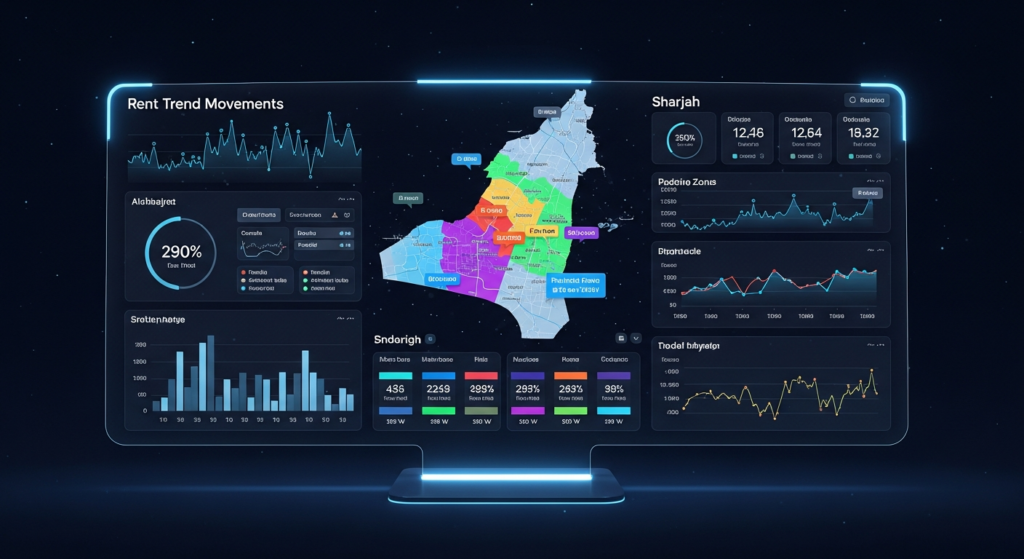
With modern forecasting tools, Sharjah’s housing market can now track thousands of individual data points for every community in which people live and buy homes. From an apartment being listed to when it is rented again, from how much it sells for to what it was priced at last time it sold (if ever) to whether families who view an apartment have a contract signed by the end of the month; all this and more can be tracked as thousands of pieces of data.
When families start looking for apartments to rent in Sharjah neighborhoods such as Aljada or Muwaileh and eventually sign a lease agreement, those early signs are already influencing the predicted rent trends.
The AI compares Sharjah’s past rent cycles with current data indicators. If a neighborhood is showing increases in occupancy, shorter listing times, and increasing volumes of inquiries, the model will identify upward pressures on the future rent trends. On the other hand, if new developments are releasing a large amount of new inventory sooner than they are being absorbed, the system will likely predict either stability or slight downward adjustments to the rents.
In doing so, AI algorithms replace guessing based upon probability and provide landlords with pricing that is aligned with reasonable expectations, while providing renters with greater clarity regarding their decision-making timelines.
Seasonal Patterns and Demand Cycles
School-Year Influence on Rental Activity
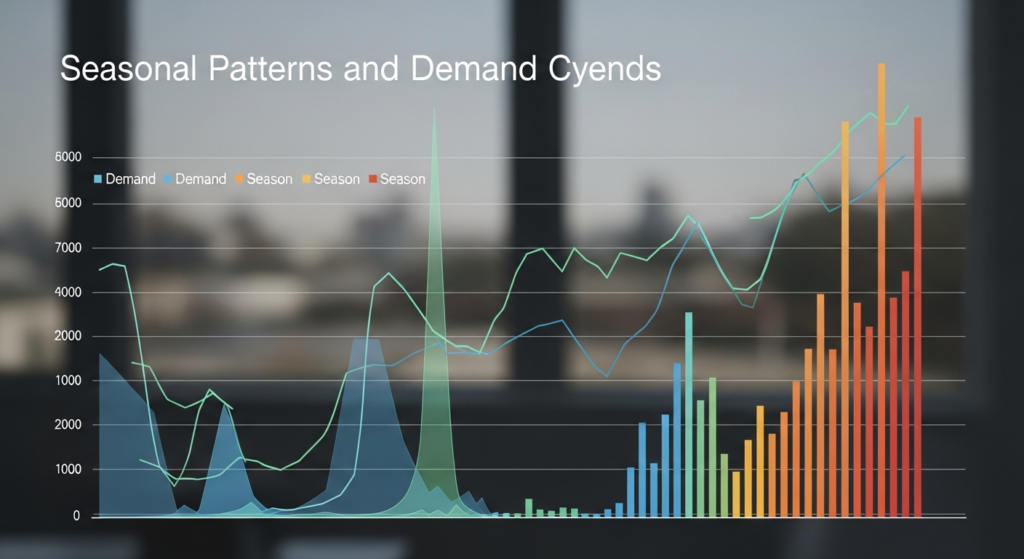
Seasonal changes in demand are a key factor in defining how rents fluctuate throughout the year. Historically, the demand for rentals typically increases prior to the beginning of an academic year, especially in neighborhoods with high concentrations of families with children and/or students, in relation to schools/universities. In addition to examining the overall level of historical lease data; AI systems also analyze long-term trends to detect seasonal fluctuations in demand.
Based on past historical trends for increased rental activity between June and September; it is reasonable for landlords to anticipate having greater leverage when negotiating with tenants during this time frame. Additionally, tenants who understand how seasonally-driven demand impacts rents may be inclined to negotiate/execute their renewal options at times other than those most competitive.
Migration from Dubai to Sharjah
Another consistent cause of the rent trend is also cross-emirate affordability migration. Due to the increasing cost of housing in Dubai; many of its residents will then look at Sharjah as an alternative with more affordable options for housing, but still have access to their job centers. AI Platforms can identify these shifts through the search patterns and inquiry sources that are generated by users based out of Dubai.
In addition when there is increased affordability pressure in a neighboring Emirate, Sharjah’s rental trends tend to grow within a short time frame thereafter. The signal provided by the migration provides an early indicator of potential demand expansion.
Data Inputs That Improve Forecast Accuracy
Transaction and Listing Behavior
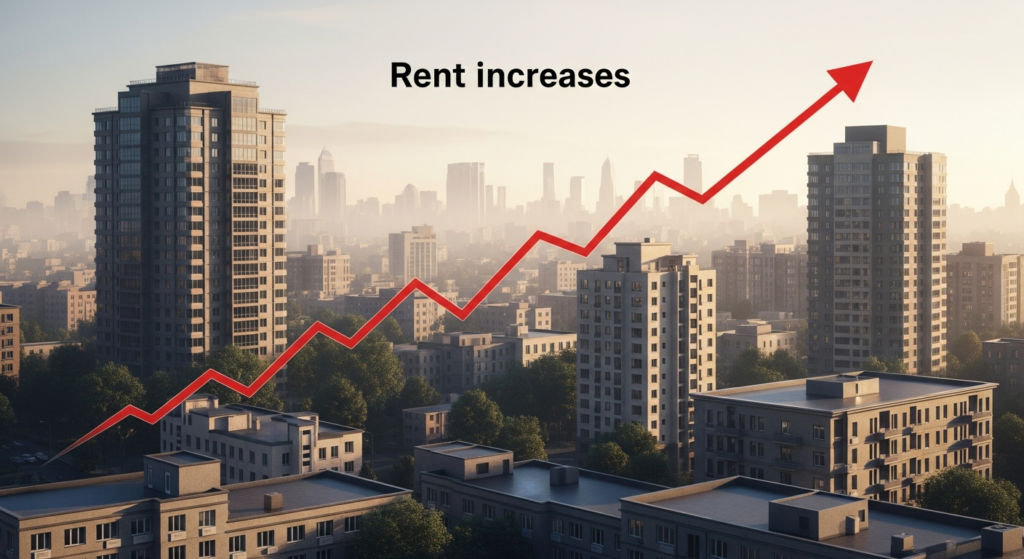
To have a reliable and accurate rent forecast trend you need to have validated, current transaction data that is supported by real time listing information. Actual rental agreements are confirmed through government transaction records while listing platforms provide landlord expectations for price along with overall sentiment on price.
If landlord expectations (advertising) indicate increasing rents, however, rental agreement completions do not indicate an upward trend, an AI system can detect this negotiation gap and help prevent investors in their anticipation of growth from incorrectly estimating future growth potential and aid in developing more realistic projection models.
Vacancy and Renewal Metrics
Tenant retention is very important to the rent trend. High renewal percentages for tenants can be an indicator that there is a high level of income stability with the residents as well as a high level of satisfaction by the residents. If renewal rates are greater than 70 percent in a particular area, it will result in less vacancy pressure and therefore support stable rental performance.
On the other hand, frequent turnover of tenants may suggest that the prices of your rentals are sensitive to changes in the market, and/or that there are competitive alternative rentals available in the near vicinity. The AI uses renewal rates to improve forecast accuracy at the neighborhood level.
Community-Level Rent Trend Forecasting
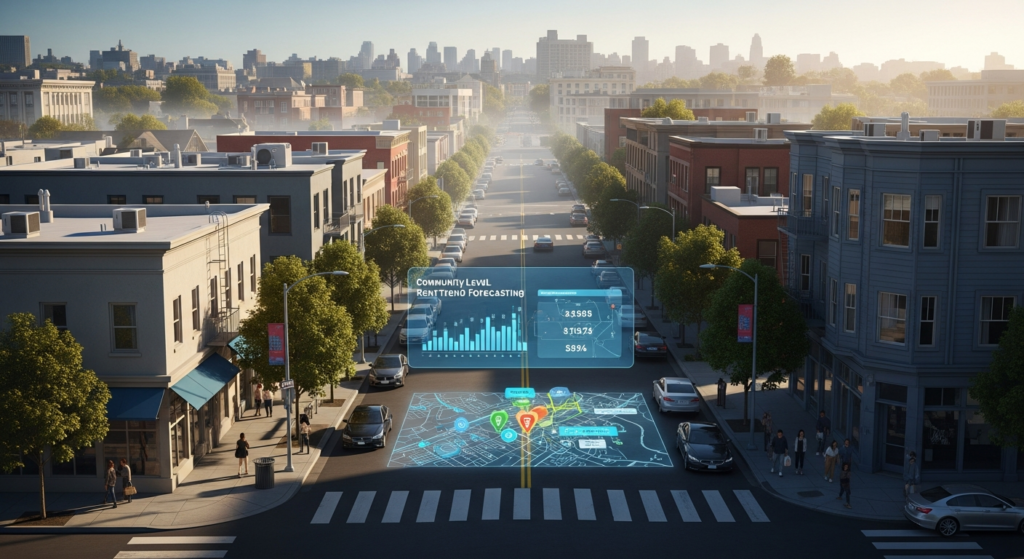
The Emirate of Sharjah is made up of many different geographic areas that do not always react in an identical manner to changes in the market. As such, certain areas like waterfront projects or older central business districts exhibit their own unique patterns of rental movement.
AI-based micro-neighborhood studies examine supply pipelines, service charges for common amenities, the age of buildings and the overall density of amenities.
In this regard, when a newly constructed area has relatively low levels of vacancy and high levels of absorption, it will most likely exhibit upward trends in rents due to a very high level of demand relative to supply. On the other hand, areas that are experiencing a large number of handovers can experience a short-term leveling off in rentals until there is better balance between supply and demand.
Therefore, local predictive analytics enable property developers to establish differentiated pricing models rather than employing broad assumptions about pricing throughout the entire emirate.
Infrastructure and Long-Term Growth Signals

Long-term rent is typically driven by large-scale, long-term investments in infrastructure. Once the local area has improved access due to a better connected road network, or once new retail shopping or health care locations have opened, we see an increase in the level of interest from tenants.
The use of AI technology allows for the analysis of past examples to determine if there are any similarities that existed between those past projects and their impact on rent trend in surrounding neighborhoods.
If past improvements to the local infrastructure resulted in sustained increases in rents for 2-3 years, then our projected forecasts would be adjusted accordingly to reflect this structural growth signal.
Investors who can recognize these structural growth signals will generally be positioned ahead of the reactive market participant.
Risk Management Through Predictive Analytics

Rentals are never predictable, and economic downturns, changes in laws and regulations, and financing terms always affect tenants’ actions. The macro-economic trends included in the AI forecast include employment levels, housing affordability, etc.
If favorable mortgage terms cause some of the renters to buy homes, then the number of people in the rental pool will decrease, thus reducing the upward trend of rents. Predictive models can help landlords develop multiple contingency pricing plans that will limit their risk of having a vacant unit and/or reduced income by modeling multiple possible outcomes.
Practical Applications for Investors and Tenants

The advantage to investors of forecasting trends in rents relates to acquiring at the optimal time and optimizing yields. While investors currently assess rental income for a specific period of time (for example 12 or 24 months), they are actually evaluating projected growth trends for that same period of time.
A moderately priced unit in an area with a high absorption rate could be more attractive than a higher priced unit in a high saturation area based on moderate price per square foot and/or lower vacancy.
Renters also have a better opportunity to negotiate by using the forecasted direction of rents as a basis to renew their lease prior to the end of the lease term. For example, if a rent trend forecast indicates that the upward momentum will continue into the next quarter, it would be beneficial for a renter to renew their lease prior to the end of the existing lease term; thereby locking-in a favorable rate for the remainder of the lease term. Conversely, if there is expected to be an increase in supply during the upcoming quarter/lease term, this provides renters with increased negotiating leverage.
Expert Market Insight and Rental Strategy Guidance
At Keyspace Realty and Keyspace Dubai, we use advanced data analysis in all of our advisory work at Keyspace Dubai and Keyspace Realty to help you understand how your anticipated future rents will affect Sharjah’s changing rental climate. We do this rather than simply using past averages as a guide for making acquisition decisions or setting up leases by combining verifiable transaction data with area-specific data that shows the performance of the neighborhoods and forward looking data models that predict future rent trend. Using an integrated model that includes current data of supply and demand along with migration patterns allows us to analyze future trends in relation to the current data, thus allowing us to give our customers more information and confidence in their decision-making.
Everything Sharjah is used as a complement to this data-based model of the Sharjah rental climate to demonstrate indirect drivers of rental demand such as new lifestyle centers, enhanced infrastructure (roads, etc.), retail development and residential/office building development. As these areas are developed, they can create a shift in what tenants are interested in renting prior to seeing price changes in completed rental transactions. The combination of predictive analytical tools with knowledge of what is happening on the ground in Sharjah, creates a complex forecasting model into actionable recommendations based upon Sharjah’s current rental landscape.
The Future of Rent Trend Forecasting in Sharjah

As Sharjah’s real estate industry expands and matures, predictive technologies are expected to transition from being a competitive advantage for select players into an expected (and possibly required) element of every company’s business strategy. The longer machine-learning algorithms continue to process data through successive leasing cycles, the more accurate and granular in nature the predicted rent trend will be. And over time, these predictions may adjust on the fly based on changes in occupancy patterns.
Predictive pricing strategies have the potential to provide a significant competitive advantage within a rapidly changing rental market, particularly when compared with companies relying solely on historical data and/or reacting to current market conditions; even if predictive pricing strategies do not completely remove all elements of risk and uncertainty associated with price determination, they should at least minimize the magnitude of those risks. Therefore, in an extremely competitive rental market where the difference between successful price management and poor price management can have a direct and quantifiable impact on an owner’s returns or a tenant’s household budget, the value of using AI-based predictive pricing is very apparent.
Frequently Asked Questions
What is a Rent Trend Forecast?
Rent Trend Forecasts analyze past and current rents in order to make predictions about how rents will be trending in a particular area.
How Reliable Are Rental Predictions Made By Artificial Intelligence (AI)?
No forecast can ever guarantee that you will get your desired rental rate, but AI has been proven to increase the reliability of forecasts through its ability to identify trends and patterns in rental data from multiple sources.
Can Tenants Use Rent Trend Data When Negotiating Their Lease?
Yes. The ability to understand where the local rental market is headed provides tenants with the knowledge they need to decide if it would be in their best interest to renew their lease early, or negotiate for a lower rent based on projected market conditions.
Will Infrastructure Projects Affect Rental Pricing?
Yes. Infrastructure improvements such as new roads, shopping centers, and other community amenities can all help improve the desirability of a location, which increases the rental demand for an area.
Are Rent Trend Forecasts Useful For Small Landlords?
Yes. Even one rental property owner can benefit from being able to predict the direction of the rental market in their area. This helps to minimize the risk of having a vacant unit and creates a stable source of rental income.
NOTE: Pictures used in the advertisement are for illustration purposes only.