
Sharjah is solidifying itself in the minds of investors as a long-term property option that will be around for a while longer. The advantage to investors in Sharjah is not in the short term price spikes, but rather the consistent appreciation in value an investor can expect through the years. An investment analysis of Sharjah’s investment opportunities clearly demonstrates that Sharjah’s real estate market fundamentals are based on steady demand; measured (not excessive) supply; and sustained investment in the area’s infrastructure.
Sharjah Real Estate Market Performance and Long-Term Growth Trends
The transaction record provided by the Sharjah Real Estate Registration Department clearly indicates that Sharjah has consistently demonstrated stability throughout numerous market cycles. Regardless of what was occurring in other regions or markets, there were always transactions happening in Sharjah. Based on this, it appears that Sharjah’s residential market is driven primarily by actual housing requirements and not speculative activity for investment analysis.
Historical Transaction Trends Over the Last Decade
Over the last decade, volume of residential transactions in Sharjah (residential sales) has moved steadily upward at a fairly stable level; it has not been dramatically volatile; however, it has developed gradually over long periods as prices have risen in “established” areas of the emirate. For those investing in real estate with a view to maintaining their position through entire property cycles, such steadiness is cumulative and produces strong returns on investment.
The mid-range apartments and “family” oriented villas have out-performed the high-end / luxury apartments and villas as they are more attuned to meet the needs of “core” demand from residents working in Dubai, who select Sharjah for its lower cost of living and larger homes. As this commuter driven demand maintains an increasing number of properties occupied, and therefore, provides for a higher percentage of resale activity, it also supports occupancies and resale liquidity in the area.
Macroeconomic Drivers Behind Sharjah’s Property Stability
A reliable investment analysis opportunity has to be based on more than just the price of the property alone. Sharjah enjoys a diverse economy that is made up of the sectors of manufacturing, education, logistics, and free zones. Markets are less likely to experience shocks when they are based on a single sector.
The population growth in a city will help create increased demand for housing. Once families have settled into a long-term residence in a particular area, the amount of turnover of tenants in that area will decrease and the area will become more stable as a community. The investors who buy their properties near existing schools, shopping centers, and medical facilities have historically had higher rates of retaining tenants.
Infrastructure Expansion and Its Impact on Value
Infrastructure is likely to be one of the best long-term drivers of property value increases. The construction of new roads and highways from Sharjah into Dubai and the northern emirates has reduced travel time to and from work. With retail developments and medical facilities being built in addition to mixed-use projects the attractiveness of an area will also increase.
As infrastructure improves before pricing increases it creates better opportunities for earlier investors. The process of tracking pipeline of future development and road/transportation upgrades is critical when considering an investment analysis opportunity that is looking towards the future.
Rental Yields and Long-Term Hold Performance
Sharjah offers historically low rental yields in comparison to its high priced neighbor cities. The combination of relatively lower acquisition cost, coupled with stable and consistent demand for rentals by tenants creates good cash flow conditions for the investor.
For example, in recent years, investors who have acquired mid-level apartments in areas along the borders with other countries have consistently enjoyed strong occupancy rates, and experienced modest capital appreciation. This is a result of the combination of rental income generated over a 10 year period, plus any potential long term appreciation in value of their property. Long term this will likely be greater than any money made through trading in the same time frame.
Risk Management and Entry Strategy
Lower cost base in Sharjah means that investors have less at risk (per unit) when they invest. Instead of putting all their money into one expensive property; investors can put their money into several different properties and thus spread out their risk of loss. Spreading out investments means that the investor will be able to have more stable income from investments as well as limit the amount of risk associated with investing in one particular market.
In addition to evaluating Sharjah’s real estate markets, an investor should consider the financial environment as it affects the ability to acquire property or sell a property. The cycle of mortgage interest rates will affect how affordable Sharjah’s housing is to buy or rent. When mortgage rates are low; this will increase both the number of buyers in the market and the demand for resale units. By securing a mortgage at a lower rate than what would normally be available to them, the investor is increasing his long term return on equity.
Regulatory Transparency and Data Reliability
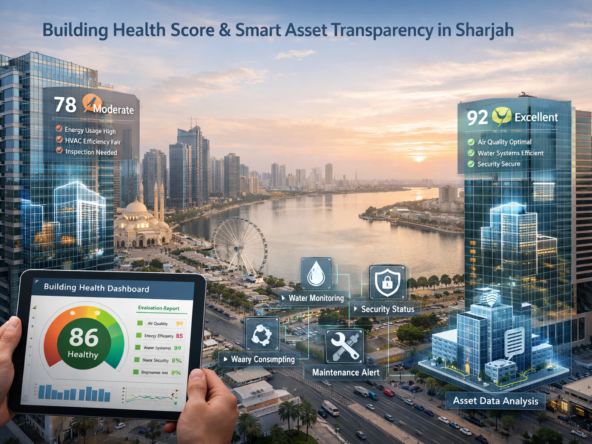
Transparent Reporting for investment analysis is a major factor in building investor confidence. Through Structured Real Estate Return Data (SRERD), investors have clear access to real estate data in a structured format. Instead of making educated guesses based on past events or stories, investors are able to see trends in volumes, categories of properties, and how those volumes have performed historically.
Clearly defined ownership rules and the process for completing transactions also help to decrease uncertainty. In addition, regulatory consistency over time will also aid in preserving long term capital.
Strategic Market Positioning for the Next 10 Years
Looking forward, an investment analysis in Sharjah’s strategy is based on a growth model that supports long term sustainable growth as opposed to an aggressive expansion model. Infrastructure developments for new planned communities, industrial zones, and improved connectivity for residents are expected to support long term appreciation of value.
Investors who have historically made decisions backed with data will be best suited for long term investment models. However, there needs to be long term sustainability of housing supply and demand as well as strong job creation centers to create sustained demand for housing in those areas.
Professional Insight for Sharjah Investors
Navigating an ever-changing market in Sharjah is made easier with the help of a trusted partner. Keyspace Realty and Keyspace Dubai can assist you in making informed decisions by providing expert, structured advice to ensure your real estate purchase will meet your financial objectives for years to come. Additionally, Everything Sharjah provides local insight on how communities are developing, new infrastructure that is being developed and what are the key lifestyle elements for residents in the area. Together, our team of experts can provide you with the knowledge to support your serious investment analysis and ultimately make well-informed long term decisions.
Frequently Asked Questions
What are the key advantages that make Sharjah attractive to a 10 year holding period for property investments?
Sharjah has consistently provided value through its price appreciation and strong rental yields at a much lower cost of entry as compared to many of the other Emirates that surround it. This will provide a long term stable foundation for investment strategies based on stability and predictable returns.
Are SRERD statistics useful in conducting an investment analysis?
Statistics from SRERD (Verified Transaction History, Volume Trends, and Property Type Performance Metrics) provide the investor with reliable data to improve the forecasting of future market activity and reduce the influence of speculative decision making.
What types of properties have historically performed well as a long-term investment analysis?
Historically, mid-range apartment and family villa types located within communities that have received significant public and private investment have produced solid occupancy rates and balanced appreciation. Historically, demand driven assets have produced better results than speculative assets.
Is Sharjah’s real estate market generally considered less risky?
The fact that Sharjah has an end user driven market helps stabilize prices, therefore reducing the potential for volatility in pricing. While Sharjah’s appreciation may be lower when compared to those markets driven by luxury buyers, Sharjah’s long term stability can also lower your overall investment risk.
Should you place more emphasis on rental yield or capital appreciation when evaluating the attractiveness of an investment opportunity?
Generally speaking, a balanced approach of focusing on both rental yield and capital appreciation will produce the most favorable outcome. The rental yield will generate ongoing revenue, while the capital appreciation will build your equity. An effective investment evaluation should assess both the rental yield and capital appreciation before purchasing.
NOTE: Pictures used in the advertisement are for illustration purposes only.