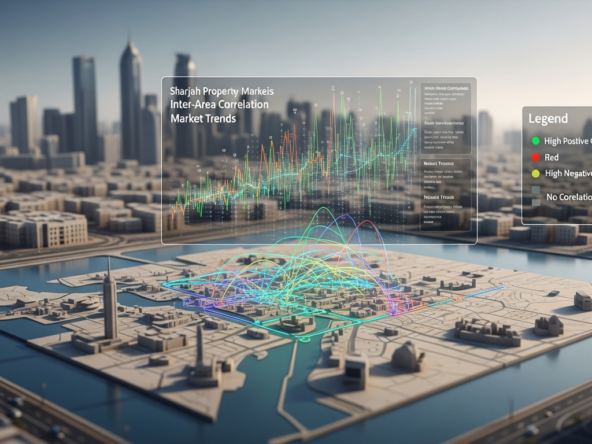
While the overall value of Sharjah’s real estate transactions reached $18 billion in 2025, (a huge increase) there are underlying economic forces behind that increase that create a powerful capital flow. The capital flow occurs when money flows through financial institutions, investment funds, and global markets and ends up in real estate. Capital flow then causes fluctuations in property values, changes in demand, and influences the type of development occurring in different areas of the Emirate.
Understanding the Capital Flow Engine Behind Sharjah’s 2025 Surge
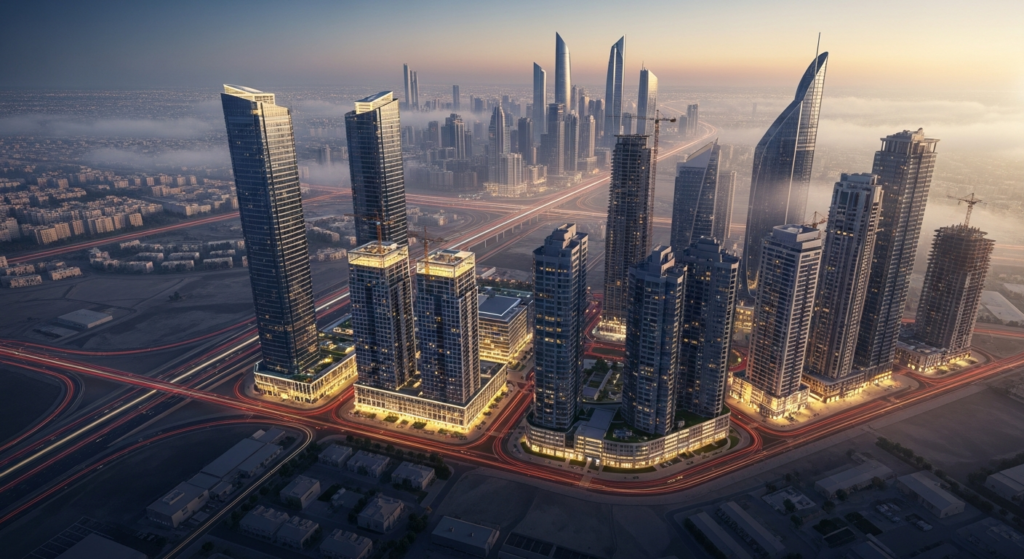
To better understand why Sharjah has experienced growth recently, we need to focus on the money flowing through the entire UAE economy rather than just looking at each project individually. Most investors do not invest solely in one property or in one area of the emirate. Instead, they follow the signal of what happens to money in the form of loans, mortgage financing, interest rates, foreign investments coming into the country, and regional growth. These factors ultimately form a capital flow system that directs the flow of investment activity into certain areas of the emirate.
Sharjah is becoming more attractive to investors because it offers the best balance of price and access compared to other areas in the UAE. With increasing housing costs in Dubai, investors are shifting their funds into neighboring cities that continue to have lower entry point options. This trend will continue creating consistent capital flow from higher priced urban areas into new developing residential areas in Sharjah.
Mortgage financing also contributes significantly to the continued growth of the Sharjah property market. When banks begin to lend more money and allow consumers to finance properties, they enable more consumers to enter the market. As a result of increased mortgage approvals, property sales grow for all types of properties including, but not limited to, mid-range apartments and single-family homes. Each mortgage approval generates additional streams of capital that feed into the overall capital flow process, driving growth in the property market.
In addition to mortgage financing, foreign capital invested into the UAE property market provides additional capital flow. Foreign investors typically search for stable markets with good infrastructure, clearly defined laws and regulations, and the potential for long-term growth. Many of these characteristics are found in Sharjah, and as foreign funds enter the UAE, the capital flow begins to filter down from large investment centers into smaller communities and residential developments.
When examining the capital flow process at a micro-level, we find that capital does not flow evenly throughout the city. Certain neighborhoods receive more investment than others based upon new or planned infrastructure, schools, transportation, or local commercial development. Localized conditions determine where the capital flow is concentrated and where property values may be driven upward.
Neighborhoods that are adjacent to newly constructed highways or growing commercial districts tend to attract early stage investors. As these neighborhoods become popular, developers launch new projects to meet the growing demand. Over time, these neighborhoods become high-activity zones within the larger Sharjah property market.
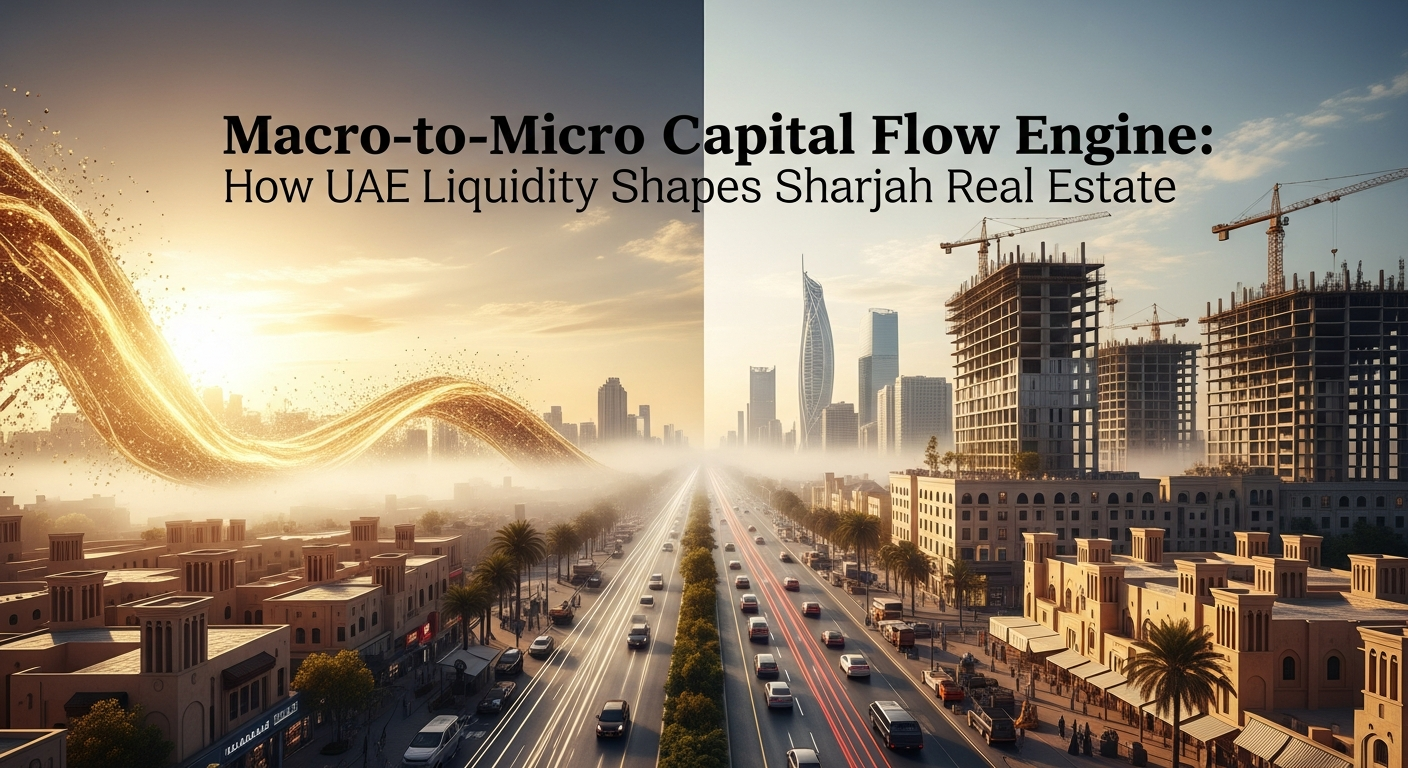
Understanding the flow of capital from a macro to micro perspective helps buyers and investors make more informed decisions about the direction of future investment. While some investors focus solely on current property pricing, they would be better served by analyzing the direction of liquidity and which neighborhoods may be the next to see significant increases in demand.
Market Intelligence from the Experts
Keyspace Realty and Keyspace Dubai are experts at identifying trends in property markets, property investing, and interpreting property market signals for investors who wish to understand the forces that are impacting Sharjah’s Real Estate Market. We provide insight from data collection and analyzing transactions as well as monitoring local development to assist investors in translating complex economic forces into actionable information that will enable them to make informed smart property investments. Our analysis bridges the gap between large scale macro-economic trends and localized changes occurring within specific neighborhoods of Sharjah, enabling investors to identify how new infrastructure is being developed, new lifestyle amenities are being added, and where tenant demand exists to create value for investors in a variety of neighborhoods throughout the Emirate of Sharjah. Everything Sharjah, adds to this entire ecosystem by providing the latest information on community updates, lifestyle enhancements and local developments which can be used to assess how various areas of Sharjah are evolving.
How Mortgage Expansion Fuels Investment Movement

The increased availability of mortgages is an important factor that shapes the amount of investment activity in the UAE real estate market. More buyers have access to home finance when banks expand their loan offerings, therefore increasing the number of transactions made by buyers at residential developments.
Increased availability of mortgages expands capital flow through its ability to multiply buying power in the marketplace. Developers and investors can now rely upon a wider group of buyers with financing options, rather than only using cash purchases, and this creates greater fluidity in capital flow throughout multiple areas.
Growth in the use of mortgages has attracted first time buyers and long-term investors to the market in Sharjah. Many renters are now seeing homeownership as a viable option for themselves, and this creates an increase in demand for apartments and villas in suburban areas where affordable pricing continues to be a major draw.
When analyzing how quickly some areas of a city absorb new housing developments after mortgage access has improved, one will see that the rate of sale increases rapidly. Banks continue to offer new financing opportunities, and developers respond to this opportunity by releasing new phases of development. The rapid pace of development creates a continuous flow of capital into the marketplace and stimulates ongoing investment in the marketplace.
Additionally, the increased demand due to mortgages can create more stable rents in the area. By attracting more people to buy homes in a community, the community creates a better balance between homeowners and renters. This creates healthier occupancy levels and lessens the fluctuations in the local rental market.
Foreign Investment and Regional Liquidity Shifts

The increase in capital flows into Sharjah is greatly influenced by foreign investors searching for access to UAE real estate. Sharjah’s stable economy and favorable policies for investors have made the area attractive to investors from the Middle East, Europe, and Asia.
Many international investors will consider multiple emirates when looking to place money in an investment opportunity. Since Dubai is such a large investment hub globally, there are many foreign investors that find themselves priced out of the local market. Therefore, those same investors look at other surrounding markets that provide similar long-term growth potential for their money. Sharjah is rapidly becoming the preferred location for foreign investors.
When international investors select properties to purchase, they typically seek properties that represent a combination of lifestyle value and long-term capital appreciation. Properties located on waterfronts, residential areas designed specifically for families, and master-planned residential areas are among some of the types of properties that foreign investors prefer. Foreign investors continue to inject additional capital into these types of properties which ultimately contributes to the increased capital flows throughout the local property market.
In addition to factors like foreign investment and the local property market, regional economic trends can also significantly influence investment patterns. When liquidity levels increase throughout the GCC countries as a result of either higher oil revenue or increased business activity, part of that increased wealth is often directed towards investing in real estate. Once that capital enters the property market it tends to flow slowly through the various major cities in the GCC until it reaches the smaller residential areas.
As mentioned previously, Sharjah receives the benefit of increased liquidity entering the property market because it provides foreign investors with a unique combination of affordability, developing infrastructure, and geographic proximity to Dubai. Therefore, foreign investors who seek to diversify their investments frequently place a portion of their investments in Sharjah properties, further increasing the amount of capital flowing into the emirate.
Why Micro-Level Analysis Matters for Investors
Understanding how to invest in cities across the board will give you a basis for making smart investments; however, the most effective way to make decisions about your real estate properties will be to analyze those areas from a micro perspective. Even if an area has a very strong overall market trend, there are many different communities that have their own unique markets depending on the availability of local services, local demand for tenants, and the plans for local development.
Investors that keep track of how money flows through various areas will know where money is flowing into a community before large price increases occur. Neighborhoods with new mass transit options or planned for additional commercial development may see money flowing in early and for extended periods before prices begin to rise significantly.
Likewise, developers also look at similar indicators when developing new residential projects. If money is flowing into an area as an investor, then the developer will likely follow shortly with new construction projects. The connection between the flow of money (capital) and the expansion of new development will help determine the future direction of Sharjah’s urban growth.
Buyers who are seeking long-term investment opportunities need to understand the overall macro-economic trends affecting the market, and the changes occurring in each individual neighborhood. The intersection of the two will provide clarity as to what neighborhoods are best positioned for future appreciation of the value of the properties located in them. As Sharjah continues to grow and attract new residents, the flow of money connecting the larger UAE economy to local communities will continue to be an important factor in determining the course of the emirate’s property market.
Frequently Asked Questions
What does capital flow mean in real estate?
Capital flow refers to the movement of money and/or funds into and through a property market. Capital flow comes in the form of money borrowed (mortgages) or invested by private individuals/institutional funds or international buyers into the property market. The resulting increase/decrease in demand and subsequent activity by developers in the construction/development of new properties will ultimately be affected by capital flow.
How does mortgage growth affect property markets?
Foreign buyers are attracted to Sharjah as they perceive it to offer relatively low priced property compared to other emirates and therefore has good potential for future appreciation in value due to its strong developing infrastructure and close proximity to Dubai.
How does mortgage growth affect property markets?
Mortgage growth provides additional funding for buyers to purchase property and subsequently increases transaction volume in the property market. With increased transactions, this also positively affects the strength of capital flow within the market, which typically results in stronger price growth and development activity.
Do foreign investors affect prices of rea estate in Sharjah?
Yes. Foreign investment adds liquidity to the market and with their added involvement, demand is typically generated in specific geographic areas and increases values of properties over time.